
Your Cheek Is a Shortcut: What Actually Happens When You Chew a Functional Gum
Category: Formulation Science By the LivNow Formulation Team Read time: 9 minutes
In 2002, a group of researchers at the US Army Research Institute of Environmental Medicine ran an experiment that most people in the supplement industry have heard about and almost nobody has read properly.
They gave healthy volunteers caffeine at three doses — 50, 100 and 200 mg — in two formats: a capsule, and a chewing gum. Then they took serial blood samples and worked out how fast the caffeine arrived and how much of it made it.
The result gets misquoted constantly, including, until recently, on this website. So let us state it accurately.
The gum was faster. Absorption rate constants for the gum ranged from about 3.21 to 3.96 per hour, against roughly 1.29 to 2.36 per hour for capsules — somewhere between one and a half and three times quicker to enter circulation.
The gum was not more bioavailable. Relative bioavailability came in at 64%, 74% and 77% for the three doses. When you correct for the fact that only about 85% of the caffeine actually leaves the gum base during a standard chew, those numbers rise to 75%, 87% and 90%. Still at or below the capsule.
That distinction matters more than any marketing claim, so we want to spend an article on it. Because the honest version of the gum delivery story is more interesting than the exaggerated one — and considerably harder to argue with.
The route a swallowed capsule takes
When you swallow something, it goes on a long journey with a toll booth at the end.
Down the oesophagus. Into the stomach, where acid at roughly pH 1.5–3.5 begins degrading anything acid-labile. Into the small intestine, where absorption actually happens across the enterocyte membrane. Then — and this is the part that governs everything — into the hepatic portal vein, which routes the entire absorbed load through the liver before it reaches systemic circulation.
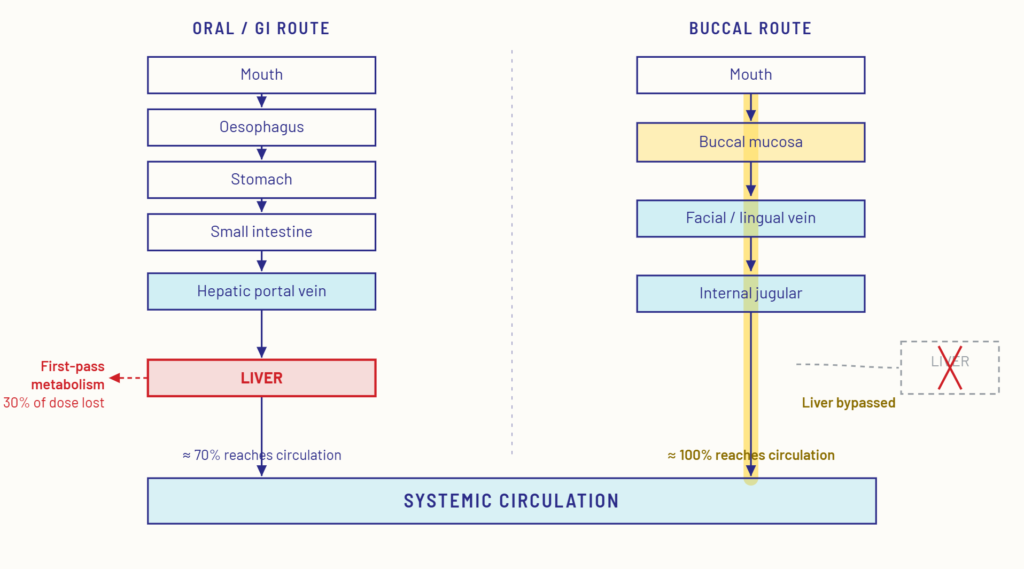
FIG 1. First-pass metabolism: oral/GI route vs. buccal route. Oral dose traverses the GI tract and the hepatic portal vein to the liver, where first-pass metabolism removes a portion before it reaches the systemic circulation. The buccal route drains via facial/lingual veins to the internal jugular, bypassing the liver.
The liver’s job at that moment is to treat your supplement as a xenobiotic and start dismantling it. Phase I oxidation via cytochrome P450 enzymes. Phase II conjugation — glucuronidation, sulfation — attaching water-soluble groups so the compound can be excreted.
Pharmacologists call this first-pass metabolism, and for some compounds it is brutal.
Curcumin is the textbook casualty. Oral curcumin undergoes such extensive intestinal and hepatic glucuronidation and sulfation that free curcumin in plasma after an oral dose is frequently at or below the limit of detection. This is not a controversial finding; it is why the entire curcumin bioavailability-enhancement industry exists.
What the buccal mucosa offers instead
The tissue lining your inner cheek is structurally different from your gut, and the differences all point the same direction.
It is a stratified squamous epithelium, roughly 500–800 µm thick, and — critically — non-keratinised, unlike the hard palate or gingiva. Non-keratinised epithelium lacks the dense ceramide-rich barrier of keratinised tissue, making it substantially more permeable.
Underneath sits a rich vascular bed draining into the internal jugular vein via the facial and lingual veins. From there: superior vena cava, right atrium, systemic circulation.
Note what is absent from that list. The stomach. The intestine. The hepatic portal vein. The liver.
A compound absorbed buccally reaches your bloodstream having bypassed both gastric degradation and first-pass hepatic metabolism entirely. Reviews of buccal delivery consistently identify this as the route’s central pharmacokinetic advantage.
There is also a second, subtler benefit specific to gum as a format. A capsule delivers its entire payload in one bolus. A gum releases actives progressively over the chew period — typically 10 to 20 minutes — as mechanical mastication deforms the gum base and partitions the active into saliva. That is a crude but real form of sustained release, without any modified-release technology at all.
Where the honesty is required
Here is what the enthusiastic version of this story leaves out.
The buccal mucosa is still a barrier. Recent work is explicit that despite bypassing first-pass metabolism, buccal administration can still produce low bioavailability, because of limited permeability of the stratified mucosa, complex tissue architecture, and rapid clearance by saliva. It is a better route for some compounds. It is not a magic door.
Physicochemistry decides everything. Buccal absorption favours small, moderately lipophilic, un-ionised molecules. Caffeine — molecular weight 194, log P around −0.07, and un-ionised at salivary pH — is close to an ideal buccal candidate, which is exactly why the Army study worked. Curcumin, at molecular weight 368 and extremely poor aqueous solubility, is a far harder proposition. We will say plainly: the evidence for meaningful systemic buccal absorption of curcumin from a gum is not established.
Saliva washes things away. You swallow continuously. Salivary flow increases sharply during chewing — one of the reasons gum helps clear acid from the mouth. That same flow carries a large fraction of any released active down the throat, where it enters the ordinary gastrointestinal route and its ordinary first-pass fate.
Dose control is imprecise. Release from a gum depends on chewing frequency, chewing force, chewing duration, and individual salivary composition. Reviews of medicated chewing gums note explicitly that gums pose difficulties in regulating the administered dose. A tablet delivers what the label says. A gum delivers what the label says if chewed as directed — which is why our packs specify one to two gums daily and a defined chew time.
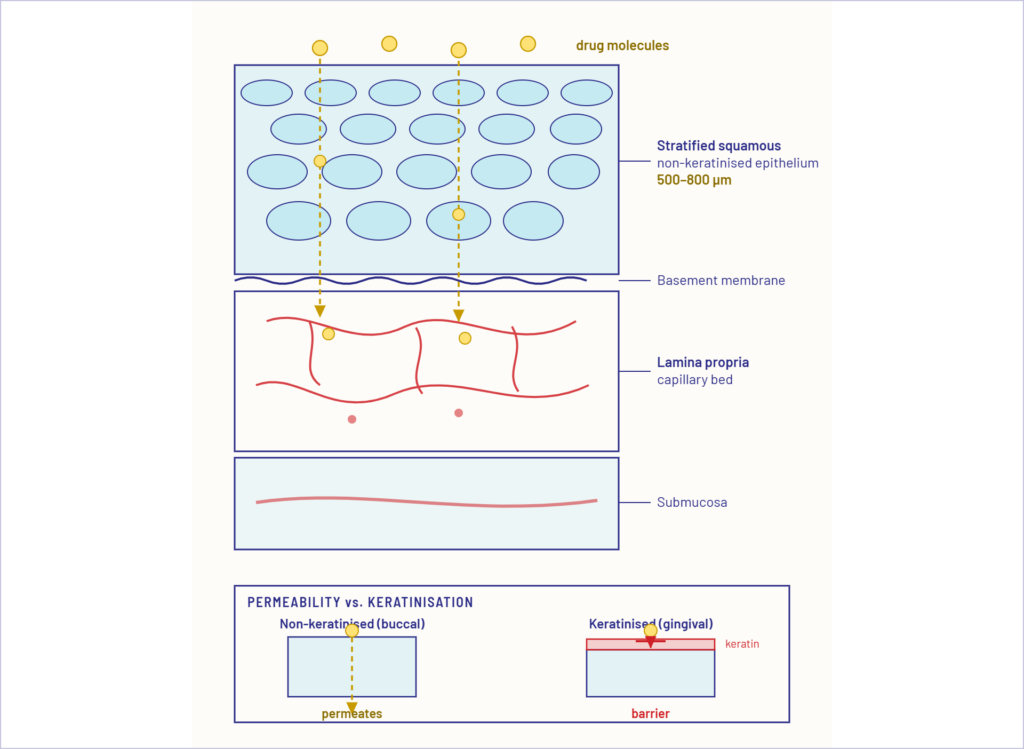
FIG 2. Buccal mucosa in cross-section. Small molecules cross the thin, non-keratinised buccal epithelium and enter the dense capillary bed of the lamina propria. Keratinisation, as on the gingiva, presents an added barrier to permeation.
So when is gum actually the right format?
Three situations, and it is worth being precise about them.
When speed matters more than total exposure. The caffeine data is the clean example. If you need onset in minutes rather than tens of minutes, the gum wins on the parameter that matters, and its slightly lower total bioavailability is irrelevant to the outcome you care about.
When the target tissue is the mouth itself. This one is underappreciated. If you are trying to act on oral bacteria, gingival tissue, or salivary chemistry, systemic bioavailability is not the goal — it is a loss term. A compound that stays in the oral cavity, bathing the dentition and mucosa for fifteen minutes at a time, is doing precisely the job. Chewing also stimulates salivary flow, and saliva is the mouth’s own buffering and remineralisation system.
This is the logic behind LivNow ClovC. Clove and curcumin are not there to reach your bloodstream. They are there to be in your mouth.
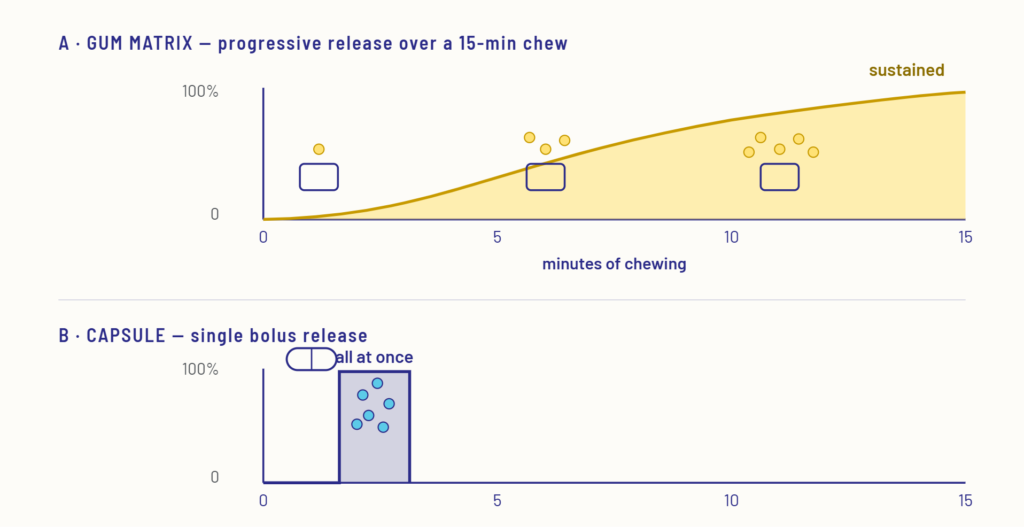
FIG 3. Plasma concentration vs. time — buccal gum vs. oral capsule. Buccal gum reaches peak plasma concentration faster than the oral capsule; the capsule attains a comparable or slightly higher C max. The distinguishing feature is the steeper early rise of the gum curve.
When adherence is the binding constraint. A format people will actually use daily beats a superior format they abandon. This is a behavioural argument, not a pharmacokinetic one, and we would rather label it honestly as such than dress it up in mechanism.
The nicotine precedent
The reason any of this is more than theory is nicotine gum, which has been in clinical use since the 1970s and remains one of the most-studied buccal delivery systems in existence.
Nicotine gum works because nicotine is a small, weakly basic molecule whose un-ionised fraction — and therefore its buccal absorption — is strongly pH-dependent. Nicotine gums are buffered specifically to raise oral pH and drive nicotine into its absorbable form. That is formulation science doing real pharmacological work, and it is the proof that a chewing gum can be a serious delivery device rather than a confection with a health claim attached.
It is also a useful reminder of the ceiling. Nicotine gum required decades of formulation development, buffering systems, and clinical trials. It did not become effective by having nicotine added to it.
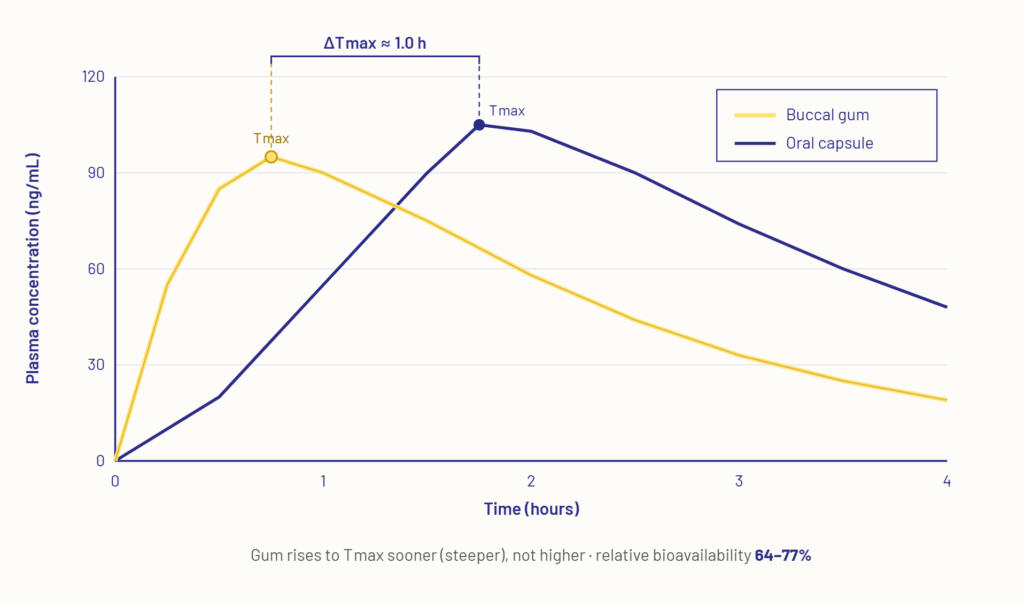
FIG 4. Active release: chewing-gum matrix vs. capsule bolus. The gum matrix releases active progressively as it is chewed, sustaining delivery across ~15 minutes; the capsule releases its full dose as a single bolus.
What this means for how we build
We are a formulation group operating out of the Technology Business Incubator at BITS Pilani, Hyderabad, and this is the framework we actually use when deciding what belongs in a gum:
- Is the target local or systemic? If local — oral cavity, upper GI — gum is a genuinely strong format and we can be confident about it.
- If systemic, is the molecule buccally viable? Small, moderately lipophilic, stable in saliva. Most botanicals are not.
- Can the active be loaded at a meaningful dose without destroying palatability? This is the constraint that kills most ideas. A gum that tastes wrong does not get chewed, and an unchewed gum has zero bioavailability by any route.
- Does the release profile match the use case? Fifteen minutes of progressive release suits some purposes and not others.
Applied honestly, this framework rules out more products than it approves. We think that is the point.
The short version
Chewing gum is a real delivery format with a real mechanism and real limits. It is faster than a capsule for suitable molecules. It is not universally more bioavailable, and anyone telling you it is has probably read a headline rather than a methods section. Where it is genuinely excellent is when the mouth itself is the destination — and that is a large and under-served category.
References
- Kamimori GH, Karyekar CS, Otterstetter R, et al. The rate of absorption and relative bioavailability of caffeine administered in chewing gum versus capsules to normal healthy volunteers. Int J Pharm. 2002;234(1-2):159-167.
- Bahraminejad S, Almoazen H. Sublingual and Buccal Delivery: A Historical and Scientific Prescriptive. Pharmaceutics. 2025;17(8):1073. doi:10.3390/pharmaceutics17081073
- Recent Advances in Development of Buccal Formulations: From Small to Macromolecules. AAPS PharmSciTech. 2025. doi:10.1208/s12249-025-03154-z
- Sabra R, Kirby D, Chouk V, et al. Buccal Absorption of Biopharmaceutics Classification System III Drugs: Formulation Approaches and Mechanistic Insights. Pharmaceutics. 2024;16(12):1563. doi:10.3390/pharmaceutics16121563
- Paradkar M, et al. Medicated Chewing Gums: Recent Patents and Patented Technology Platforms. Recent Pat Drug Deliv Formul. PMC7040514.
- Shojaei AH. Buccal mucosa as a route for systemic drug delivery: a review. J Pharm Pharm Sci. 1998;1(1):15-30.
- Bilosome-mediated buccal delivery: mechanistic insights. Int J Pharm X. 2025;10:100444. doi:10.1016/j.ijpx.2025.100444
Twenty-Seven Trials Later: What the Evidence Actually Says About Turmeric and Clove for Your Mouth
Category: Ingredients; By the LivNow Formulation Team; Read time: 8 minutes
Every Indian household has done this. Toothache at eleven at night, no dentist until morning, and someone in the family produces a clove from the kitchen and tells you to bite down on it and hold it against the tooth.
It works. Not as folklore — as pharmacology. And the reason it works turns out to be one of the better-documented stories in botanical oral care, while the turmeric half of the same tradition sits on evidence that is genuinely strong in one respect and genuinely thin in another.
We formulate LivNow ClovC around both. So we should be precise about which is which.
The clove story is a pharmacology story
Clove — Syzygium aromaticum — is unusual among culinary spices in that a single compound accounts for most of its activity. Clove bud oil is typically 70–90% eugenol, a phenylpropanoid that dentistry has used formally for well over a century. Zinc oxide-eugenol cements are still in the British and Indian pharmacopoeias. When your dentist places a temporary filling, there is a reasonable chance you are being treated with clove chemistry.
Eugenol does three distinct things, and they are worth separating.
It blocks pain transmission. Eugenol acts on voltage-gated sodium channels and on TRPV1 receptors in sensory neurons. This is the mechanism behind the grandmother’s remedy — it is a genuine local anaesthetic effect, not suggestion.
It disrupts bacterial membranes. In vitro work shows eugenol increases membrane permeability in target organisms, with crystal violet assays, leakage of 260 nm-absorbing intracellular material, SEM and AFM imaging all confirming disruptive action on the cytoplasmic membrane.
It suppresses biofilm formation specifically. This is the more interesting finding. In Streptococcus mutans — the organism most associated with cariogenic biofilm — eugenol inhibited virulence traits including adherence and biofilm formation. Against Porphyromonas gingivalis, a periodontal pathogen, eugenol inhibited biofilm formation and reduced pre-formed biofilm, with down-regulation of the virulence genes fimA, hagA, hagB, rgpA, rgpB and kgp.
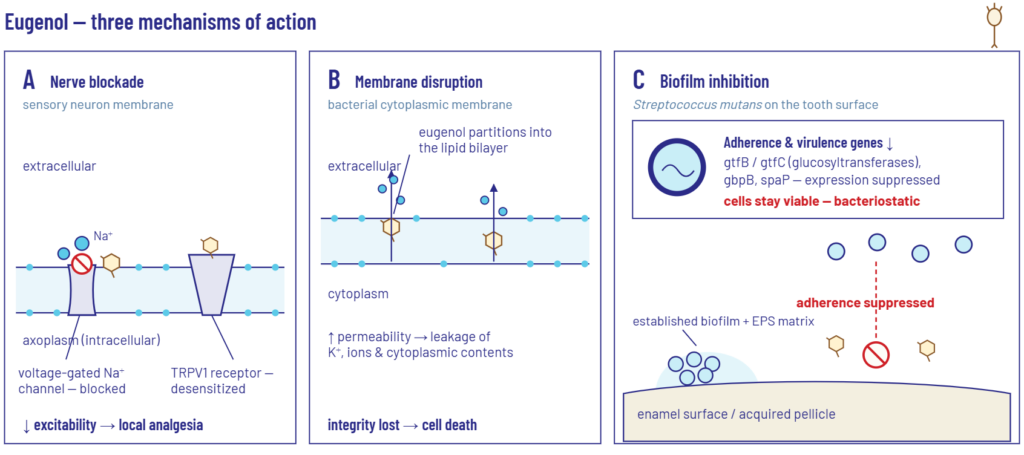
Figure 1. Eugenol’s three mechanisms of action, sharing one visual language (eugenol = brown molecular glyph; red = inhibition). (A) Analgesia — block of voltage-gated Na⁺ channels and desensitization of TRPV1 in the sensory-neuron membrane. (B) Bactericidal — eugenol partitions into the cytoplasmic membrane, raising permeability until intracellular contents leak and the cell dies. (C) The key mechanism — on the tooth surface, eugenol suppresses S. mutans adherence and virulence-gene expression (gtfB/C, gbpB) while the cells remain viable: bacteriostatic, not bactericidal.
Notably, in one of these studies growth curves at OD600 showed no significant difference between control and eugenol-treated samples — meaning eugenol suppressed the virulence behaviour without killing the bacteria outright. That is a meaningfully different pharmacological profile from a broad-spectrum antiseptic, and arguably a more desirable one if you would rather not carpet-bomb your oral microbiome twice a day.
The honest caveat: almost all of this is in vitro. Petri dishes and biofilm assays, not mouths. The concentrations used in laboratory work are frequently higher than what 12 mg of clove oil in a chewing gum will produce in saliva. We are describing a well-characterised mechanism, not a demonstrated clinical outcome for our product.
The curcumin story is a clinical-trial story, with an asterisk
Here the evidence structure inverts. The mechanistic case for curcumin is diffuse — it interacts with NF-κB signalling, inflammatory cytokine cascades, and a long list of other targets, to the point where sceptics reasonably call it promiscuous. But the clinical literature in oral health is unexpectedly substantial.
A systematic review and meta-analysis of curcumin as an adjunct in chronic periodontitis identified 27 randomised controlled trials comprising 963 participants, examining plaque reduction, gingival inflammation and probing pocket depth. Curcumin local delivery gel showed greater reduction in probing pocket depth than comparators.
A separate systematic review of curcumin in gingivitis screened 422 papers and included 14 clinical trials, finding that in most of them curcumin achieved significant reductions in plaque index, gingival index, gingival bleeding index and microbial colony count — and was as effective as chlorhexidine.
A meta-analysis restricted to curcumin mouthwash versus chlorhexidine included six RCTs with 320 subjects and concluded there is no difference between curcumin mouthwashes and chlorhexidine mouthwashes in decreasing dental plaque and gingival inflammation.
Chlorhexidine is the reference-standard antiplaque agent in dentistry. Matching it is not a small result. And chlorhexidine has real drawbacks in daily use — tooth staining, taste disturbance, mucosal irritation — which is precisely why the trials were run.
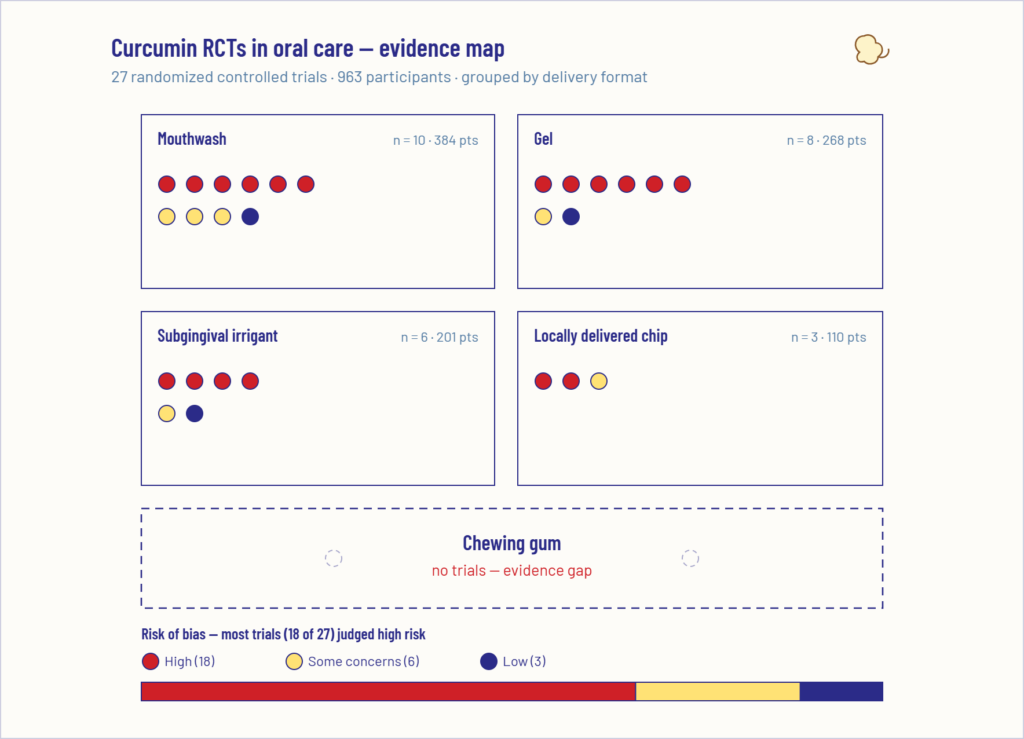
Figure 2. Evidence map of the curcumin clinical literature: 27 RCTs and 963 participants, each dot one trial, grouped by delivery format and colored by risk of bias. The body of work is substantial across mouthwash, gel, subgingival irrigant and locally delivered chip — yet chewing gum has no trials at all (dashed category), and most trials (18 of 27) are at high risk of bias.
Now the asterisk, and it is a large one. Of the six trials in that mouthwash meta-analysis, five showed a high risk of bias and only one showed low risk. The trials are small, frequently unblinded, and heterogeneous in curcumin preparation and concentration. This is a literature that points in a consistent direction while being methodologically weak, and a formulation team that pretended otherwise would be doing you a disservice.
The second asterisk: every one of those trials used a mouthwash, a gel, a subgingival irrigant, or a locally delivered chip. Not one used a chewing gum. Extrapolating from a 20% curcumin mouthwash to 60 mg of curcumin in a gum is an inference, not a finding.
Why we put them together, and why the black pepper is not what you think
ClovC contains 60 mg of curcumin, 12 mg of clove oil, and 10 mg of black pepper (Piper nigrum) per gum, in a sugar-free base sweetened with 600 mg maltitol, 120 mg xylitol and 6 mg steviol glycosides.
We will note in passing what those sweetener figures mean, because it matters for a product sold on oral health: at 120 mg of xylitol and a labelled one to two gums daily, the xylitol here is a sweetener, not an anti-caries agent. The dose is roughly 3–7% of the threshold the dental literature associates with any effect on Streptococcus mutans. We have written a separate piece working through that arithmetic in full, because we think it is the single most over-claimed number in the sugar-free gum category — including by companies that would rather you did not do the division.
ClovC’s oral care rationale rests on clove and curcumin, contact time and salivary stimulation. Not on the sweetener.
That black pepper deserves explaining, because there is a marketing story here that we are deliberately not telling.
The famous piperine finding — Shoba and colleagues, 1998 — showed that 20 mg of piperine co-administered with curcumin increased curcumin’s systemic bioavailability by around 2000% in human volunteers. It is one of the most-cited results in supplement science and it appears on a great many labels.
It does not apply here. Whole black pepper fruit contains roughly 3–8% piperine by weight, so 10 mg of black pepper delivers somewhere in the region of 0.3 to 0.8 mg of piperine. At the label dose of one to two gums daily, that is roughly 0.3 to 1.6 mg — one to two orders of magnitude below the dose used in the bioavailability work.
We could have written “with piperine for enhanced absorption” on the pack. It would have been technically true and substantively misleading.
There is a second reason we are content with the low dose. Piperine’s bioavailability effect comes from inhibiting CYP3A4 and P-glycoprotein — the same enzymes and transporters that clear a long list of prescription medicines. In a once-daily capsule taken deliberately, that is a manageable known quantity. In a chewing gum that people might treat casually, a pharmacologically active piperine dose would be an interaction risk hiding in a confection. At under 2 mg per day, it is not.
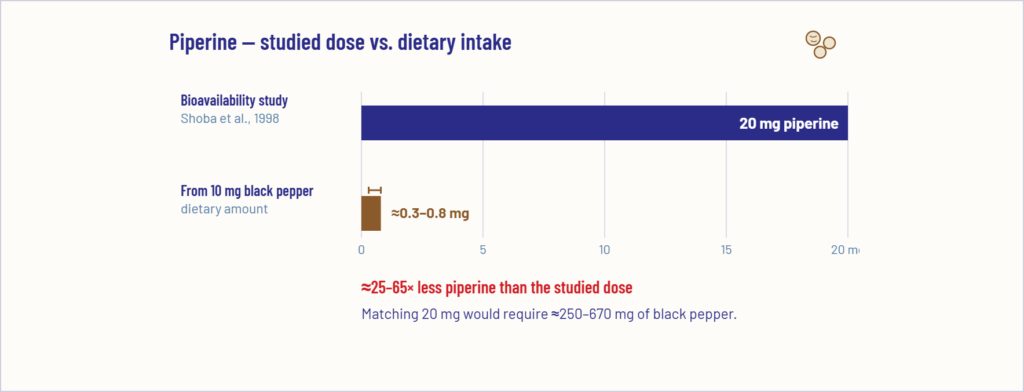
Figure 3. Dose in context: the 20 mg of piperine used in the Shoba bioavailability study dwarfs the ~0.3–0.8 mg delivered by 10 mg of black pepper — roughly 25–65× less. Reaching the studied dose from diet alone would take hundreds of milligrams of pepper.
So what is the black pepper doing? It is there for the reason it has been paired with turmeric in Indian kitchens for centuries: maricha and haridra are a traditional combination, and the pepper contributes to the flavour profile and the sensory character of the gum. That is a smaller claim than the label convention allows. It is the accurate one.
What a gum format does and does not add here
Return to the framework from our piece on buccal delivery. The question is whether the target is local or systemic.
For ClovC it is unambiguously local. We are not trying to get curcumin into your bloodstream — and given curcumin’s molecular weight, aqueous insolubility and extensive first-pass glucuronidation, we would be poor at it if we tried. We are trying to keep clove and turmeric chemistry in contact with your teeth, gums and saliva for ten to fifteen minutes.
For that job the gum format contributes three things:
Contact time. A mouthwash contacts oral tissue for thirty seconds. A gum does so for a quarter of an hour, with mechanical distribution into interdental spaces that a rinse reaches poorly.
Salivary stimulation. Chewing sharply increases salivary flow. Saliva is the mouth’s native buffering system — bicarbonate and phosphate raising plaque pH after an acid challenge, calcium and phosphate supporting enamel remineralisation. A substantial part of any sugar-free gum’s oral benefit comes simply from making you salivate, independent of what is in it.
Adherence. A gum after lunch at your desk is something people actually do. A curcumin mouthwash regimen at 3pm is not.
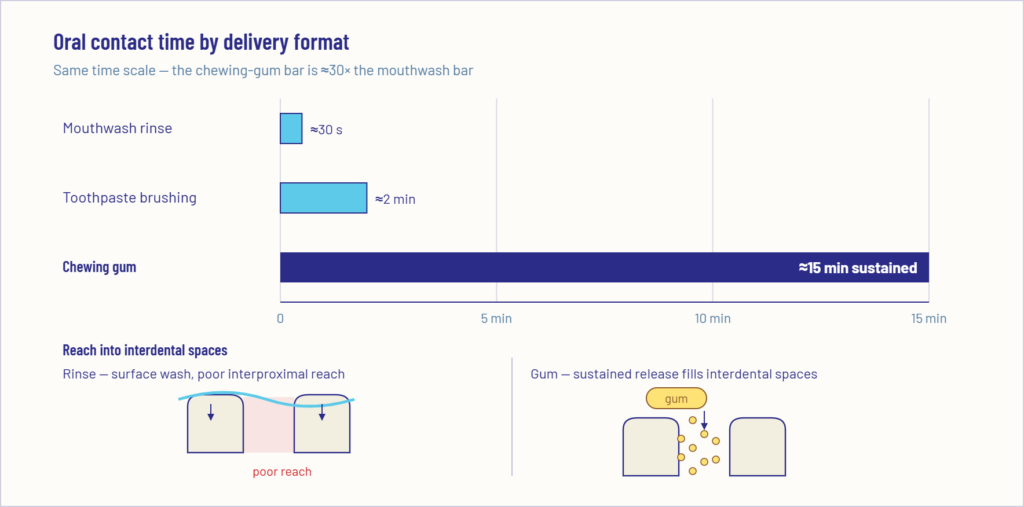
Figure 4. Oral contact duration by delivery format on a shared scale: a mouthwash rinse (~30 s), toothpaste brushing (~2 min) and chewing gum (~15 min), where gum sustains contact roughly 30× longer than a rinse. The schematic below contrasts a surface rinse that reaches interproximal spaces poorly with gum, which releases actives directly into those spaces over time.
What we are not claiming
We are a food company operating under FSSAI regulation, and there are statements we will not make regardless of how the mechanism reads.
We do not claim ClovC prevents or treats dental caries. Caries is a disease; foods do not treat diseases; and the trial evidence for curcumin and clove in gum form does not exist yet in any case.
We do not claim it replaces brushing, flossing, or a dentist. Mechanical plaque removal is the foundation of oral hygiene and nothing chewable substitutes for it.
We do not claim the mouthwash and gel trial results transfer to our product. They inform our formulation choices. They do not validate them.
What we do say: ClovC is a sugar-free gum containing clove oil and curcumin, two ingredients with a long documented history in Indian oral care and a growing body of clinical literature in adjunctive oral hygiene, in a format that maximises contact time and stimulates salivary flow.
That is the claim the evidence supports. We would rather make it and be right.
References
Cai H, Chen J, Panagodage Perera NK, Liang X. Effects of Herbal Mouthwashes on Plaque and Inflammation Control for Patients with Gingivitis. Evid Based Complement Alternat Med. 2020;2020:2829854.
Sharma A, et al. The effect of curcumin as an adjunct in the treatment of chronic periodontitis: A systematic review and meta-analysis. Saudi Dent J. 2021. PMID: 34803277
Zafar MS, Shaikh MS. There is no difference between curcumin mouthwashes and chlorhexidine mouthwashes in decreasing dental plaque and gingival inflammation. J Evid Based Dent Pract. 2022;22(2):101727.
Curcumin mouthwashes versus chlorhexidine in controlling plaque and gingivitis: A systematic review and meta-analysis. Int J Dent Hyg. 2021. PMID: 34013606
The Effects of Curcumin in the Treatment of Gingivitis: A Systematic Review of Clinical Trials. PMID: 34331691
Eugenol-induced suppression of biofilm-forming genes in Streptococcus mutans: An approach to inhibit biofilms. J Microbiol Methods. 2014.
Syzygium aromaticum (clove buds) as a natural antibacterial agent. Front Microbiol. 2025;16:1674590. doi:10.3389/fmicb.2025.1674590
Shoba G, Joy D, Joseph T, et al. Influence of piperine on the pharmacokinetics of curcumin in animals and human volunteers. Planta Med. 1998;64(4):353-356.